I Came to the UAE Without a Job. 25 Days Later, I Had One. Here's What I Learnt.
How a suitcase, a stack of CVs, a few bus rides and a change of strategy helped me land my first job in Dubai in 25 days.
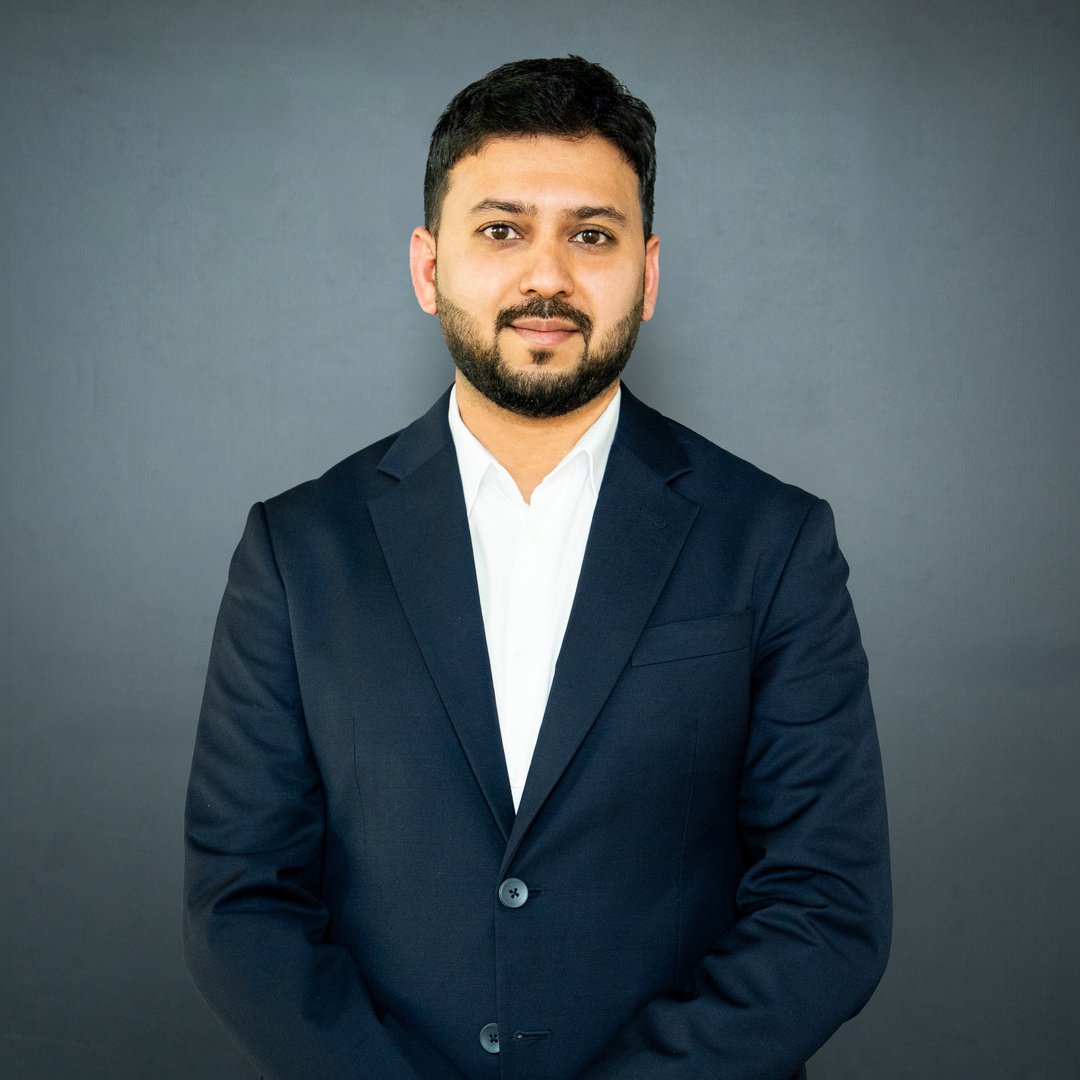
7 January 2016. I landed in Abu Dhabi.
1 February 2016. I started my first job in Dubai.
Twenty-five days. That's all it took between arriving in the UAE and walking into my first office as an employee.
Looking back, it sounds like a neatly planned career move. It wasn't.
There was no elaborate strategy, no recruitment consultant waiting for me, no impressive network of industry connections and certainly no job offer waiting at the airport.
There was just a young man from Bangalore, a visit visa, a suitcase, a few relatives in the UAE and a fairly strong belief that things would somehow work out.
I didn't know exactly how I was going to find a job. But I knew I had to find one.
And those 25 days taught me more about job hunting, people, business and human behaviour than I could have learned from several career development workshops.
The leap of faith
My decision to move to the UAE had started much earlier.
After deciding to leave my job at Idea Cellular on 31 January 2015, I began exploring opportunities in the UAE. I applied for a visit visa, informed two of my uncles living in Abu Dhabi and started preparing for the move.
I eventually landed in Abu Dhabi on 7 January 2016.
My uncles had arranged accommodation for me in Mussaffah, an industrial area in Abu Dhabi. One of them picked me up from the airport late at night.
I still remember the yellowish city lights of Abu Dhabi as we drove through the roads. There was something about that first glimpse of the city that stayed with me. It was unfamiliar, exciting and, in a strange way, comforting.
I spent the first night at my uncle's house.
The following day, I moved into the bed space they had arranged for me.
And that was when reality introduced itself.
Welcome to the UAE!
The room was small and cold. I was sleeping on a bunk bed, sharing the space with several other people who were also trying to make something of their lives.
One night, a gentleman returned to the room rather drunk and decided to throw up on the floor.
Unfortunately, my bag happened to be in the wrong place at the wrong time.
It wasn't exactly the glamorous beginning I had imagined for my international career.
But the people around me were good. Most were working hard, looking for better opportunities and figuring out life in a foreign country. I started talking to them, collecting information and understanding how things worked.
Everyone had a story. Some had been there for years, some were new, and others were still waiting for their big break.
I was one of them.
My emotional state was an interesting combination of excitement, anxiety and determination. I had left the familiarity of Bangalore, spent my savings to come to another country and now had to make things work.
There was no point in feeling sorry for myself. I needed a job.
The 100-CV strategy
My uncle had a fairly standard UAE job-hunting strategy.
Print a large number of CVs, drive around industrial areas, visit companies and distribute them at reception desks.
So, we printed approximately 100 copies of my CV.
I started visiting companies across Mussaffah, handing over my CV wherever I could. Later, I travelled to Abu Dhabi city and continued doing the same.
I also started calling people I knew from India, hoping someone might have a connection or know about an opening.
Nothing particularly useful came out of those calls.
There was another challenge. I didn't want to spend money on taxis unnecessarily. Every time I purchased something, I was mentally converting the amount from AED into INR.
A taxi ride that cost a few dirhams suddenly felt like a financial decision requiring board approval.
So, buses became my best friends.
I was travelling around, visiting companies, talking to people and trying to understand the job market one conversation at a time.
Then, one day, something happened that changed my approach.
The bus conversation that changed my strategy
On my way back to Mussaffah, I met a guy around my age who was also looking for a job.
We started talking.
I told him what I was doing, and he explained his approach. He had around 100 CVs in his bag and was distributing them across companies.
That day, I had managed to visit approximately ten companies.
He had distributed five times more CVs than I had.
He was quite confident, too. His brother-in-law was eventually going to help him secure a job in his company. In a way, he was out there gaining some character development before the actual opportunity arrived.
Good for him.
But that conversation got me thinking.
If I continued doing exactly what everyone else was doing, what would make me different?
Hundreds of people were walking into offices, dropping CVs at reception desks and hoping someone would eventually call them.
The problem wasn't necessarily the number of CVs I had.
It was the approach.
I remember thinking:
I don't need 100 job offers. I just need one.
That became my turning point.
I decided to stop measuring my progress by the number of CVs I distributed and start measuring it by the quality of conversations I had.
I stopped distributing CVs and started collecting information
I changed my strategy.
Instead of simply walking into an office, handing over my CV and walking out, I started treating every company visit as an opportunity to gather information.
A few things changed.
1. I started asking questions at reception.
Receptionists were no longer just people who accepted CVs. They were my first point of contact with the organisation.
I started asking about the company, the departments, hiring requirements and whether there were any actual vacancies.
2. I started collecting names and details.
I tried to find out who the HR manager was, who handled recruitment and who managed the department I was interested in.
A CV addressed to a person is much more useful than one sitting anonymously in a reception tray.
3. I became selective about the companies I approached.
I stopped wasting time visiting companies where there was clearly no possibility of employment.
I wanted to focus on businesses where my experience and skills could genuinely be useful.
4. I started talking to taxi drivers.
This might sound unusual, but taxi drivers know a lot about a city.
They interact with people from different industries, visit offices every day and often know which businesses are expanding or hiring.
I started asking questions. Sometimes, a simple conversation with someone who knows the city can give you information that an online search won't.
5. I revisited companies.
If I found a company with a possible opening, I didn't simply assume that leaving my CV meant the job was done.
I went back.
I checked whether the receptionist had forwarded my CV to the relevant person. I tried to understand what was happening with the vacancy.
6. I developed a follow-up routine.
I started calling companies, following up on conversations and keeping track of where I had applied.
I understood that getting noticed was only half the job. Staying on someone's radar, without becoming irritating, was equally important.
7. I started wearing suits.
This was a small but deliberate change.
I wanted to look like someone who was ready to walk into an office and have a professional conversation, not someone who was simply distributing CVs.
I couldn't control whether a company had a vacancy, but I could control how I presented myself.
Slowly, my job search started becoming more intentional.
The unexpected trip to Sharjah
One day, I came across a newspaper advertisement announcing an interview opportunity in Sharjah.
I decided to take a bus and attend.
When I arrived, I realised it wasn't quite what I had expected. It was an employment agency asking candidates for money.
I wasn't comfortable with the arrangement. Something about it didn't feel right, and I decided not to proceed.
I wasn't going to pay someone simply for the promise of a job.
Instead of travelling all the way back to Abu Dhabi, I decided to stay that night at my mother's cousin's house in Sharjah.
And that decision turned out to be interesting for a completely different reason.
That day, I got to see Dubai.
The high-rise buildings, the roads, the energy and the general atmosphere caught my attention.
I remember looking around and thinking that this was where I wanted to be.
There was something about Dubai that felt right.
Mussaffah had given me my first introduction to life in the UAE. Sharjah had given me an unexpected detour. But Dubai was beginning to feel like home.
I didn't have a job there yet.
But I had made up my mind.
A cup of tea that changed everything
The next day, I spoke to my uncle and decided to visit his former boss in Bur Dubai.
He was in the IT business, and I thought meeting him might lead to an opportunity.
I called him and explained that I was looking for a job.
From his tone, I gathered that he wasn't particularly enthusiastic about helping me. Perhaps he had agreed to meet out of courtesy.
I wasn't going to let that affect the meeting.
When we met, I didn't immediately start talking about vacancies or asking him to find me a job.
Instead, we decided to sit in a small café and have a cup of tea.
We spoke about my work in Bangalore, my experience at Idea Cellular, what I wanted to do in Dubai and what I was hoping to achieve.
I wasn't trying to impress him with big promises. I simply explained what I had done, what I knew and what I was capable of doing.
I think something changed during that conversation.
He began to understand that I wasn't someone who had arrived in the UAE expecting others to figure out his future. I was serious about working, understood the value of an opportunity and was willing to put in the effort.
His attitude changed.
Instead of giving me a few encouraging words and sending me on my way, he decided to help.
He said something along the lines of:
"Let's take a walk. We'll see if there are any vacancies in some of these IT shops."
And off we went.
Two shops. One opportunity.
We visited just two businesses.
The first was a small shop. My uncle knew the owner, and after exchanging pleasantries, he asked whether there was a vacancy.
The owner told us he had already hired someone.
That was that.
We moved on to the second place.
It looked like a reasonably established office. I wasn't entirely sure what the business did, but we walked in.
My uncle asked for the Sales Manager, who wasn't available at the time.
This time, I took the initiative.
I asked the receptionist if she could connect me to him over the phone.
I spoke to the Sales Manager directly.
It must have been an interesting sight.
I was wearing a suit, and the gentleman accompanying me looked like a businessman who knew the Sales Manager personally. The receptionist probably had no idea what was happening.
But it worked.
After a brief conversation, the Sales Manager asked me to come back the following day.
The company was Graphic International Center LLC.
I had finally found something worth pursuing.
I went back to Sharjah that evening because it was closer to Dubai, and the next morning I returned to the same office.
This time, I met the Sales Manager in person.
We spoke for approximately half an hour. He was looking for a Sales Associate, and after our conversation, he took me to meet the Deputy General Manager.
Things were moving.
The following day, I was informed that I would have an interview with HR within the next few weeks.
For me, the situation was quite clear.
There was an actual vacancy. I had relevant experience. I had managed to speak to the right people, and the company had shown interest.
I didn't need to start distributing another hundred CVs.
I needed to follow through.
So I did.
I kept in touch, followed up professionally and made sure I didn't lose momentum.
Within a week, I was at the company's head office, meeting the HR Manager and discussing the final details of my employment.
And just like that, I had my first job in Dubai.
My first day at work was 1 February 2016.
Twenty-five days after landing in Abu Dhabi.
What those 25 days taught me
Looking back, I realise that finding a job in the UAE wasn't just about having a good CV or being lucky enough to meet the right person.
It was about understanding how opportunities actually work.
Here are a few things I learnt during those days.
1. Activity is not the same as progress.
You can distribute 100 CVs a day and feel extremely productive. But if none of them reaches the right person, what have you achieved?
Ten meaningful conversations can be more valuable than 100 unanswered applications.
2. Understand the person before asking for something.
My conversation over a cup of tea was probably more valuable than all the CVs I had distributed.
People are more willing to help when they understand who you are, what you bring to the table and why you are serious about the opportunity.
3. Learn to observe and adapt.
The biggest change in my job search happened when I stopped following the conventional approach.
I observed what others were doing, questioned whether it was effective and changed my strategy.
Sometimes, the smartest move isn't working harder at something. It's recognising that you should be doing something differently.
4. Don't underestimate the people around you.
A receptionist, a taxi driver, a shopkeeper or someone sitting next to you on a bus might have information that could change your direction.
Don't look at people only in terms of what they can do for you. Have conversations. Be curious. Listen.
5. Follow-up is a professional skill.
Leaving a CV is an introduction, not an achievement.
A well-timed follow-up demonstrates interest, confidence and discipline. There is a difference between being persistent and being desperate. Learning that difference matters.
6. Presentation matters.
Your CV gets you considered. Your communication gets you heard. Your attitude and professionalism help people decide whether they want to work with you.
I learnt that the way you present yourself is part of the opportunity.
7. Don't be afraid to change your destination.
I arrived in Abu Dhabi, explored Mussaffah, travelled to Sharjah and eventually found my opportunity in Dubai.
I didn't have a fixed geographical plan. I had a clear objective.
Sometimes, you have to be flexible about the route while remaining firm about the destination.
A little perspective
I often think about that young man who arrived in the UAE in January 2016.
He was sleeping in a shared room, travelling by bus to save money, carrying CVs around industrial areas and trying to figure out how to establish himself in a new country.
He didn't have the answers.
He didn't know that a conversation on a bus would change his approach, that a newspaper advertisement would take him to Sharjah, or that a cup of tea in Bur Dubai would lead to his first job in Dubai.
But he kept moving.
And perhaps that was the most important thing.
Over the years, I've worked with different companies, people and industries in the UAE. I've had the opportunity to learn, make mistakes, build relationships and grow professionally.
When I look back, I don't see those first 25 days as a story about finding a job quickly.
I see them as the beginning of a mindset.
Don't just look for opportunities. Learn how to recognise them, approach them and create them.
And if there is one thing I'd tell anyone arriving in the UAE to look for a job, it would be this:
Don't spend all your time trying to get your CV into 100 offices.
Spend some time figuring out which one of those offices actually needs someone like you.
After all, you don't need 100 job offers.
You just need one.
Looking to scale your brand with unorthodox, high-conversion campaigns?
From grassroots activation to luxury automotive positioning across Dubai and Singapore, Nikhil consults on digital architecture, viral distribution, and private collector acquisition.
What Happens When a Student Emails the CEO of Pepsi?
Sometimes your first real marketing lesson doesn’t come from a textbook.
Ten practical lessons that taught me more than memorising case studies ever could.
Business school is supposed to teach you about business?
Case Studies & Research Papers
Why some of the things I did as a student still matter to me today.